
In today’s world of increased digitalisation and interconnectivity the financial sector is at greater risk of information and communication technology (ICT) disruptions, including potentially catastrophic cyber threats. The Digital Operational Resilience Act (DORA) is a legislative framework aimed at enhancing the security of network and ICT systems of organisations operating in the financial sector. It creates a regulatory structure on digital operational resilience, whereby all entities can withstand, respond to and recover from all types of ICT related disruptions. These requirements are homogenous across the EU, with the core aim to prevent and mitigate cyber threats. DORA seeks to bring uniform requirements for ICT risk management, incident reporting, digital operational resilience testing, ICT third-party risk management, and information-sharing arrangements. The regulation consolidates and upgrades ICT risk requirements to ensure a high level of digital operational resilience, enhancing the financial sector’s stability and consumer trust. DORA also aims to reduce regulatory complexity, foster supervisory convergence, and increase legal certainty, especially for financial entities operating across borders. By harmonising ICT risk management practices, DORA helps financial entities minimise the impact and costs of ICT disruptions, ultimately preserving the integrity and efficiency of the financial market.
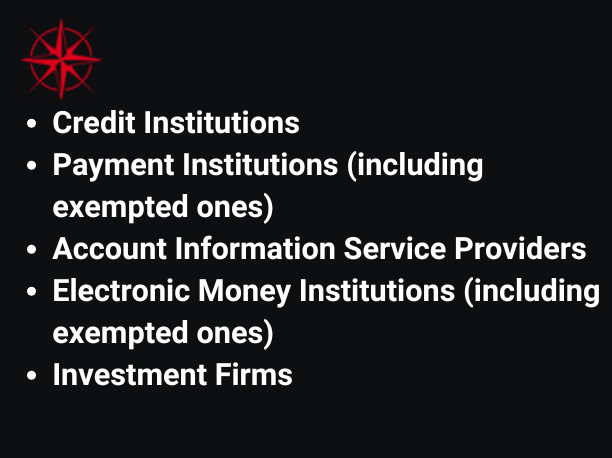
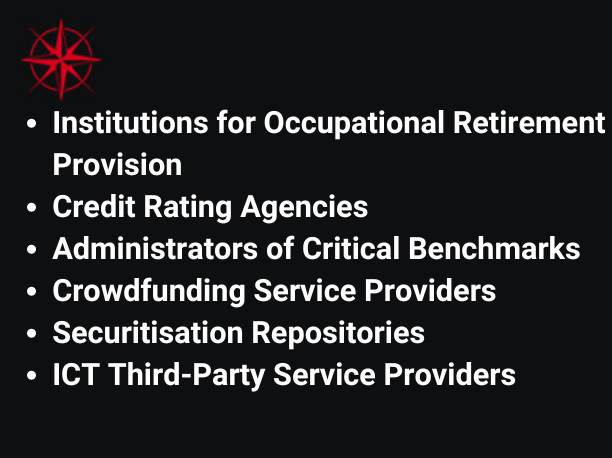
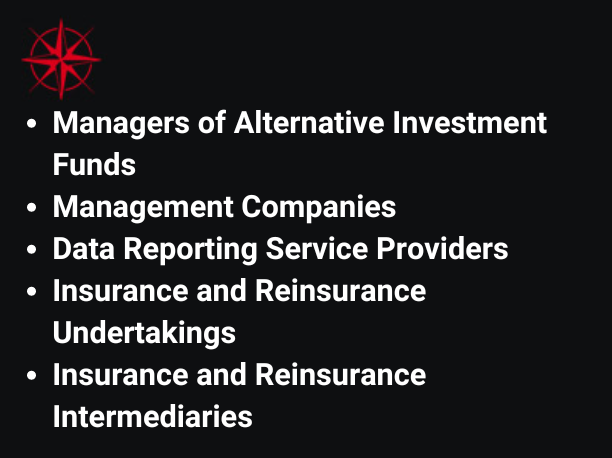
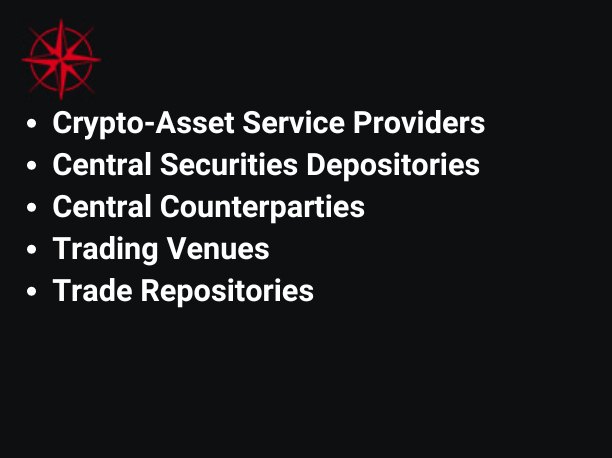
QuadPrime, a member of the MAP S.Platis Group, specialises in security and resilience advisory services. We offer customised solutions to help financial firms comply with DORA’s requirements.
QuadPrime champions a resilience-centric approach, partnering with clients to continuously build their capacity to withstand and recover from increasingly disruptive events.
• Seasoned Team: Our team consists of cybersecurity professionals with extensive experience in compliance frameworks like DORA and ISO standards.
• Proven Track Record: We have a successful history of helping organisations achieve and maintain compliance with various regulations.
• Understanding of the Specific Regulatory Environment: We provide the seamless integration of DORA within existing Frameworks leading to significant cost savings throughout the compliance process.
We can assist with implementing these technical controls and ensuring they meet DORA’s specifications.
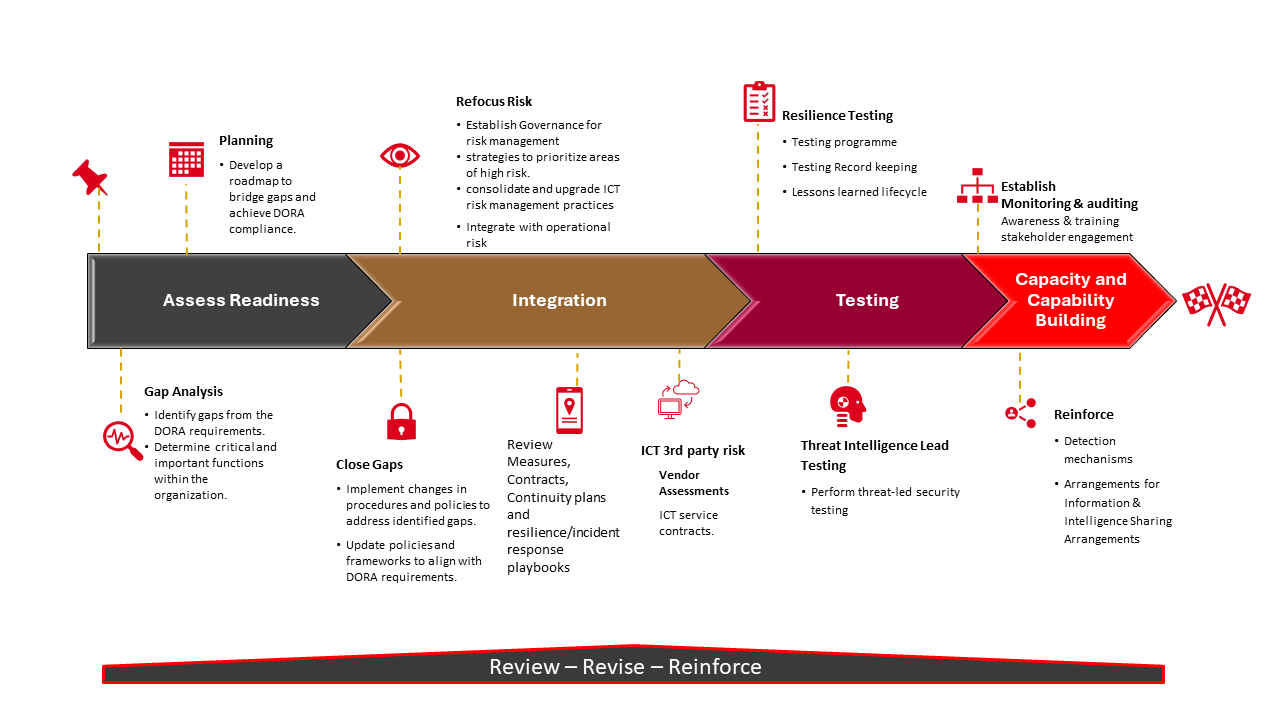
The main objective of DORA is to ensure that financial entities are capable of withstanding, responding to and recovering from ICT-related disruptions and threats. It aims to harmonise and strengthen digital operational resilience across the financial sector, protecting the integrity and stability of the financial system.
DORA applies to a wide range of financial entities, including banks, investment firms, insurance companies, payment service providers and critical ICT third-party service providers. It covers all entities that provide financial services within the EU to ensure consistent standards for digital operational resilience.
Non-compliance with DORA can result in administrative and criminal penalties, remedial measures and public disclosure of the non-compliance. Competent authorities can impose fines, require corrective actions and restrict or prohibit certain operations of non-compliant entities to enforce adherence to the regulation.
The ICT risk management framework should be reviewed at least once a year. Additionally, reviews should occur more frequently if major ICT-related incidents occur or significant changes in the ICT environment arise, ensuring the framework remains effective and up to date.
The Lead Overseer oversees critical ICT third-party service providers, ensuring they manage ICT risks effectively. This role includes conducting assessments, providing risk mitigation guidance and coordinating oversight activities across jurisdictions to maintain consistent and effective supervision, preventing systemic risks in the financial sector.
By emphasising testing, DORA aims to shift the focus from reacting to security incidents to proactively identifying and mitigating risks. This approach helps build more resilient digital infrastructure that can withstand cyber threats and disruptions. DORA requires ICT risk-based testing for microenterprises (Article 25) and Advanced testing of ICT tools, systems and processes based on TLPT Threat-Led Penetration Testing (TLPT) (Article 26).
To further support our clients, QuadPrime offers COMPDEFAI, a powerful compliance software tool purpose-built for DORA alignment. Developed by auditors and cybersecurity professionals, COMPDEFAI enables financial entities to streamline their digital operational resilience assessments, identify control gaps, track remediation progress, and generate audit-ready reports. With full coverage of the DORA framework and intuitive dashboards for oversight, it empowers compliance, risk, and IT teams to meet regulatory expectations efficiently, far beyond what traditional spreadsheets can offer.